Commercialising school and youth sport is not the problem, underfunding it is
 School and youth sport has always carried pressure.
Pressure to perform.
Pressure to win.
Pressure to balance academics, training and expectations.
The idea that commercialisation somehow introduces pressure into an otherwise pressure-free environment is both naïve and unhelpful. Pressure already exists. The real question is whether we are equipping young athletes with the support systems they need to manage it safely, sustainably and successfully.
That is where commercialisation, done properly, becomes not a risk, but a responsibility.
The Funding Gap No One Likes Talking About
Across South Africa, schools and universities are being asked to deliver more from their sports programmes than ever before:
- Better and safer facilities
- Qualified, specialised coaching
Proper medical, physiotherapy and conditioning support
- Structured touring programmes
- Access to balanced nutrition
In some cases, academic and educational support for student-athletes
Yet many of these programmes are expected to operate on legacy budgets, goodwill and occasional sponsorship, often concentrated around a handful of headline sports.
The result is predictable:
- A few programmes thrive
- Many operate under strain
Too many athletes fall through the cracks
If we are serious about participation, inclusion and athlete welfare, then sustainable funding is not optional.
Commercialisation Is About Investment, Not Exploitation
The caricature of sponsorship as something that “uses” young athletes misses the point entirely.
Responsible commercialisation:
- Funds better coaching, not shortcuts
- Pays for medical care, not pressure to play injured
- Enables safer facilities, not riskier environments
- Supports nutrition and recovery, not burnout
Creates access, not exclusion
In fact, one could argue that the greater risk lies in underfunded sport, where:
- Injuries go untreated
- Coaches are overextended
- Touring becomes inequitable
- Nutrition is an afterthought
Mental and physical load is unmanaged
Commercial support, when structured properly, allows institutions to reduce harmful pressures, not increase them.
Young Athletes Are Already Under Pressure – Let’s Be Honest About That
Let’s be clear:
The pressures young people face today extend far beyond sport.
Academic competition, social media, financial uncertainty, family expectations and future career anxiety all weigh heavily. Sport does not create this pressure, but it can either amplify it or help manage it, depending on how well resourced the system is.
Well-funded sports environments:
- Provide structure
- Offer mentorship
- Teach resilience and teamwork
- Build identity and belonging
Create pathways rather than dead ends
The presence of sponsors does not inherently add pressure. Poor governance and poor funding do.
Why Measurement and Accountability Matter
One of the most important shifts in recent years has been the move from informal sponsorship to measured, accountable partnerships.
With proper data, schools and universities can:
- Price sponsorship rights fairly
- Protect athlete and institutional values
- Set clear expectations with partners
- Report transparently on value delivered
Reinvest income across multiple sports
This is where organisations like Nielsen Sports South Africa play a critical role, helping institutions understand the real value of their audiences, events and content and ensuring that commercial decisions are evidence-based, not guesswork.
Commercialisation without measurement is risky.
Commercialisation with measurement is responsible.
The Role of SuperSport Schools
The rise of platforms like SuperSport Schools has fundamentally changed the landscape.
Streaming has:
- Made school sport visible at scale
- Created measurable audiences
- Opened new storytelling opportunities
Given the schools real media assets
With visibility comes responsibility to use that exposure not just for pride, but for long-term sustainability. Commercialisation is the mechanism that converts exposure into investment.
A Necessary Industry Conversation
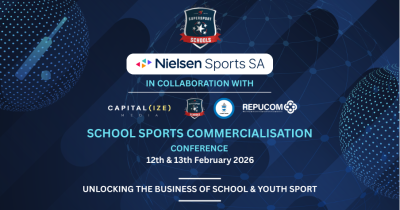
These issues will be unpacked in detail at the Nielsen Sports School and Youth Sport Commercialisation Conference, powered by SuperSport Schools, taking place 12th and 13th February 2026.
The conference exists for one reason: to help schools and universities fund sport responsibly, professionally and sustainably across multiple codes.
It is not about selling out.
It is about stepping up.
The Real Question We Should Be Asking
The debate should not be:
“Does sponsorship put pressure on young athletes?”
The real question is:
“Is it responsible to run ambitious sports programmes without properly funding the systems that support young people?”
If we care about athlete welfare, inclusion and opportunity, then commercialisation done ethically and intelligently is part of the solution.
School and youth sport are too important to be underfunded.
And the future of South African sport depends on what we do about that.